Заглавная страница Избранные статьи Случайная статья Познавательные статьи Новые добавления Обратная связь FAQ Написать работу КАТЕГОРИИ:  Археология Археология Биология Биология Генетика Генетика География География Информатика Информатика История История Логика Логика Маркетинг Маркетинг Математика Математика Менеджмент Менеджмент Механика Механика Педагогика Педагогика Религия Религия Социология Социология Технологии Технологии Физика Физика Философия Философия Финансы Финансы Химия Химия Экология ЭкологияТОП 10 на сайте Приготовление дезинфицирующих растворов различной концентрацииТехника нижней прямой подачи мяча. Франко-прусская война (причины и последствия) Организация работы процедурного кабинета Смысловое и механическое запоминание, их место и роль в усвоении знаний Коммуникативные барьеры и пути их преодоления Обработка изделий медицинского назначения многократного применения Образцы текста публицистического стиля Четыре типа изменения баланса Задачи с ответами для Всероссийской олимпиады по праву 
Мы поможем в написании ваших работ! ЗНАЕТЕ ЛИ ВЫ?
Влияние общества на человека
Приготовление дезинфицирующих растворов различной концентрации Практические работы по географии для 6 класса Организация работы процедурного кабинета Изменения в неживой природе осенью Уборка процедурного кабинета Сольфеджио. Все правила по сольфеджио Балочные системы. Определение реакций опор и моментов защемления |
Lecture № 9 . Pedagogical communication as the basis of interactions of pedagogical process subjects IIСодержание книги
Поиск на нашем сайте
Plan: 1. Concept and structure of pedagogical communication 2. Functions, types, stages, styles of pedagogical communication. 3. The speech culture of the teacher - as a condition of success of the professional activity.
Purpose: To acquaint future teachers with types, features, styles of pedagogical communication, to create conditions for the development of communicative skills.
Verbal communication is the process of exchanging information between one person and another. It is the key to the people, the most important powerful force and the basic means of verbal communication. Through the speech mastery of man, we can observe wisdom, culture, upbringing, and even the character of his outlook. Therefore, the lack of speaking skills of many people is their vulnerability. The vocabulary is associated with the work of the large hemispheres of the human brain. Each word of a person means something, that is, its contents. In order to be able to better understand the words spoken by the people involved, they should speak in one language (Kazakh, English, Russian, etc.). At the same time, each word must be clear, impressive, expressive. It is a good idea to have a shorter version of the speech because each person has his own peculiarities in perceiving and absorbing large amounts of information. In addition, one of the key indicators of the teacher's speech culture is the richness and purity of the language, the ability to communicate with other languages without distorting the tongue, to the ears, and to enhance the prestige and reputation of the teacher. Some people have become unusual in their speech when talking to them. For example, "i.e.", "naturally," "mean", "yeah", "in general", etc. It is difficult to say that the unwanted repetition of words is a good impression on listeners. On the contrary, the repetition of such words often implies a lack of human speech or a low level of speech culture. A person needs special exercise to form a culture of speech. Examples of real-life examples, interesting facts, and appropriate proverbs and sayings, through the use of vocabulary (verbal) communication, help to increase the interest of listeners and dazzle them. Verbal сommunication are divided into two types: axial and retail.
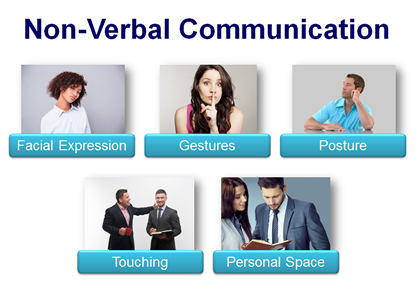
Non-verbal communication is an unconditional communication through expression, gesture, pantomime.
Mimics is a manifestation of his mental state, feeling, and mood through movements of the human face. Hypersensibility is the active motion of the hands in relation to the mental state of a person during communication. Pantomime is the presence of human hands, body, and legs in communication. At first glance, it seems unobtainable, but if you concentrate on the surroundings, you can see how many unobtrusive ways of sharing information are being used. In addition to our mother tongue, we try to learn a few languages, learn computer skills, and language known to all peoples, as well as languages, were spoken. In learning this More information than non - verbal communication can be obtained from verbal communication. It takes more information than by listening. It is well-known that during the speeches, people's facial expressions and actions are also involved. In the process of communication, the identity of the person, especially the source, gives a lot of information. Through the eyes of the human eye, the mood of a person can be understood. People are not free to say, "Eye is a mirror of a human being". About 80% of the world's information can be received by sight. It's much easier for us to continue the conversation if we do not see the person in the conversation. For example, if your interlocutor is wearing sunglasses, you will feel uncomfortable because you do not see her. Or consider these examples. The teacher writes the lecture he/she reads on the tape recorder to the audience. The teacher should make a lecture before the audience. Read lectures at the back desk, not the front of the teacher's desk. The teacher is lecturing himself, but in the eyes of his eyes, he is wearing sunglasses. In what case is the lecture well received? Why? Justify your answers with different examples. The views themselves are different. For example, the following points are met in everyday communication: - A big open eye - when you get surprised, it happens. - Direct sight - expresses interest in the person, dear, willingness to speak with him. - Folding the eyelashes - angry, angry, when an angry person comes up. - Looking back - thinking is something that is suspected of something. - The slant approach is a watchful eye when something is dissatisfied. - Do not look at your eyes, look down - when guilty, submissive. - Look down from the top - do not despise, count yourself. At the same time, the muscles of the human eye give a lot of information about others. Folding eyelids, eyebrows, one-eyed eye, eye shooting, blurring, and so on. The mimic changes in the human face provide additional information in communication. It is not difficult to have any kind of communication if the teacher can read it all on the child's side. The concept of tactics in teacher work also plays a big role. It is definitely the closest childhood attraction made from the head of the child, his hand holding his shoulder, adjusting his shoulders, fixing the coat, straightening the handkerchief, handing greetings, greeting greetings, etc. Such admiring behavior of adults is a good, warm affair for some younger children. For example, if a student repeatedly goes back to the back desk, a tactile approach will give a more positive outcome if the teacher explaining the lesson to the child instead of making a croaked warning, slowly pulling it on his shoulder and turning it to his desk. It is also important for a person to keep his body alive while communicating. Keeping the top up, the vertical people are always strong in their power, knowledgeable, passionate for work. If a person constantly wipes his head down, the person's inner weakness and lack of work will be noticeable. Interactive communication is the basis of modern pedagogical technologies in which both students and educators are provided with the opportunity to develop and implement their own best practices. It is important for a person to be able to communicate, interact, and express the personality of the individual. There are many prestigious members in all teams, but in spite of the fact that the teacher is actively involved in the activities of all students, it is a good idea to create a comfortable environment. The team that has solidarity with each other, wants to be very organized, and always tries to co-operate with one another. The positive attitude of one person to the other person in the collective is determined by the concept of sympathy. This antipathy is that one person has a negative attitude toward another person. Everyone needs to learn to be always good at others, to build confidence, understanding and respect for each other, because they work within the group and within the team. In order to adapt these children to school age, the teacher should be able to examine and organize the peculiarities of the organization of student activities in the classroom, always focusing on the positive aspects of the children and the positive attitudes of the pupils, further encourages them to achieve good results. One of the key peculiarities of interactive communication can be seen in the joint actions of one-to-one people in achieving common goals. That is, the interaction of people here seems important. There are two types of interactive communication:
The purpose of interactive communication is to improve communication between people. Communication is only beneficial by doing well, so a large number of good deeds such as mutual help, mutual respect, mutual support, mutual understanding are the key to achieving a successful outcome. In order to be able to manage these relationships, it is important for a teacher to study the structure, development stages and peculiarities of the pupils' collective, and to develop their temperament types (melancholic, sanguine, choleric, and phlegmatic).
Psycho-physiological, young and personal peculiarities of the students need to be used to organize perceptual communication. The more teachers want to understand their students, the more they understand the teacher. In this case, there is a nature of the pedagogical process. Unfortunately, there are teachers who cannot reflexively analyze their behavior. Such people only blame students for any failure in the teaching process and always consider their actions to be correct. They do not try to understand the child's soul, rather than count on his thoughts, but rather he does not listen to what he says and decides on his own will. In this case, the child remains the object, not the subject of pedagogical activity. In addition, the main functions of the pedagogical relationship, which are important for personal development, are: 1. The process of information exchange through the communication function is implemented. It is important to educate, educate, develop their personality. 2. The organization, coordination, management of interaction of pupils with the interactive communication function is carried out. 3. The psychological state of pupils' perceptual attitude is realized by an understanding of their mood. The functions offered by the lecture are closely interrelated in specific pedagogical activities. As the exchange of information, the teacher will feel the inner feeling of the students and will be able to collaborate in their learning and cognitive activities. In addition to the types of pedagogical relationships that take place in the teaching experience, let's get to know the basic styles. Pedagogical communication style is personal and psychological features of the teacher's interaction with his / her students. Each teacher has a unique set of communication with children. Due to these features, each student has a different psychological situation in the classroom. In pedagogy, psychology, sociology, the following styles of communication are grouped:
2. In the liberal style of communication, the teacher refuses to make a decision and returns the response to the pupils and colleagues. The teacher adheres to the position: "As it happens". 3. In democratic societies, pupils and teachers are regarded as equal subjects of pedagogical communication. This is a style teacher who adheres to the principle: "We all plan together, work together, achieve success together".
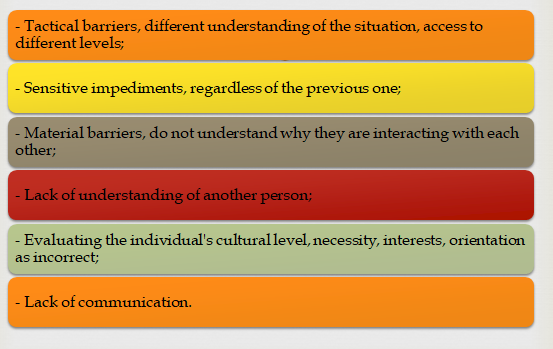
Personal relationship barriers are, first of all, the effect of the first effect, secondly the effect advantage, the third effect unity of the effect, the fourth effect the duration of effect. The interlocutors should be aware of the importance of communication mechanisms in the perception of identity, reflection and stereotyping.
Control questions 1. What is an authoritarian style in pedagogical communication? 2. What is the liberal style of pedagogical communication? 3. What is the peculiarity of democratic style in pedagogical communication? 4. How do you understand empathy, sympathy, antipathy?
|
||||
|
|
Последнее изменение этой страницы: 2019-12-15; просмотров: 1727; Нарушение авторского права страницы; Мы поможем в написании вашей работы! infopedia.su Все материалы представленные на сайте исключительно с целью ознакомления читателями и не преследуют коммерческих целей или нарушение авторских прав. Обратная связь - 216.73.217.89 (0.01 с.) |

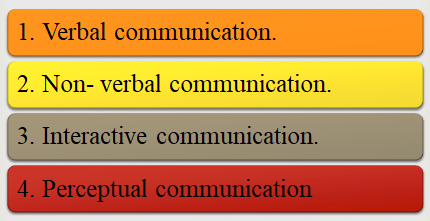 Each future teacher should learn how to study pedagogical communication, its organizational stages, and the important peculiarities of its professional activities.In everyday life, there are many forms of communication. The communication between teachers and students in psychological and pedagogical practice are divided into the following four main types:
 language, life itself teaches lots of lessons, but not paying attention to it, we all do not fully grasp them.
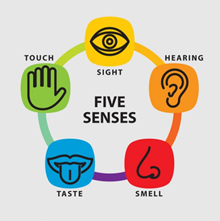 Perceptual communication is the perception of the inner person of another person (perceptio - perception, perception, mental functioning). Perceptions - processing and recognition of sensory information, psychological function of perception. Of course, understanding the inner person of a developing person is a complex process. This ability is most often seen in psychologists, doctors, and educators. Empathy is the feeling that a person can put himself in the place of another and understand it. Especially in the relationship between a teacher and a student, one can evaluate the personality traits of children through empathy. Thus, empathy in pedagogical activity is the fact that the teacher is able to feel the inner world of his / her own student. Empathy of the teacher contributes to the development of an effective approach to conflict situations with close relationships with students. Self-esteem, self-esteem and self-esteem are called reflexes. The search for answers to questions like "What am I?", "How do others react?" Is a reflection process.
 1. In an authoritarian style of communication, the teacher makes a decision without taking into account students' interests, where the teacher adheres to the position: "I have said the law" and "I obey, you do it".
 The relationship is an important professional tool for pedagogical activity. Pedagogical communication is a professional relationship of the teacher with the students aimed at creating a positive psychological climate. Pedagogical communication is characterized by socio-psychological process: recognition of personality, information exchange, an organization of activities, self-determination. The task of the teacher is to create conditions for self-identification of students, to deepen their personality, to form the person's future and adequate self-esteem. If communication is not perceived in accordance with his / her experience and image, the individual feels isolated in the relationship. Man experiences difficulties in communication. Psychologist V.A. Labunskaya is seen difficult communication as a social psychological phenomenon in the form of mutual misunderstanding of people. Difficult communication includes a long pause in communication, one-to-one responses, increased voice rhythm, inaccessible listening, unwillingness to communicate, lack of communication, rudeness, discrimination of partner, disobedience, leniency, shyness, disagreement, lie, uncertainty, inconsistency, ignoring your partner's opinion. The difficulty of communication is caused by anxiety and negative emotions, and disturbance of relationships also creates personal difficulties for the individual. The situation is not a matter of qualitatively presenting the essence of communication in the relationships between individuals. Violation of individuality relationships is carried out by modification and correction of the system of communication requiring psychological help. Psychologists show six types of interdependence barriers:
 An identity is a conscious person who understands it. Instead, he sets his heart, his thoughts, his actions, and his feelings in his heart. Reflexes are the basis of an understanding human. The understanding of the other person is to accept that the person's communication is merely a matter of self-worth. Thus, man's perception of man is the image of his surroundings. A person portrays himself as a personality man and depicts himself in the person's acceptance mirror. Identity and reflection are united in the process of communication. Stereotyping is a form of forms of behavior, and sometimes it is a form of social stereotypes that attributes no unreasonable behavior to visible phenomena, such as acquaintances or acquaintances. The stereotype is to always follow the image of the man who formed it individually.